VICTORIA'S LEADING INSULATION SUPPLIER AND ONLINE STORE
1/1

Independent Way Ravenhall, Vic 3023

Mon - Fri: 7.00am - 5.00pm

Why Ceiling Insulation Is the Best Investment for Victorian Homes This Winter

27 August 2026
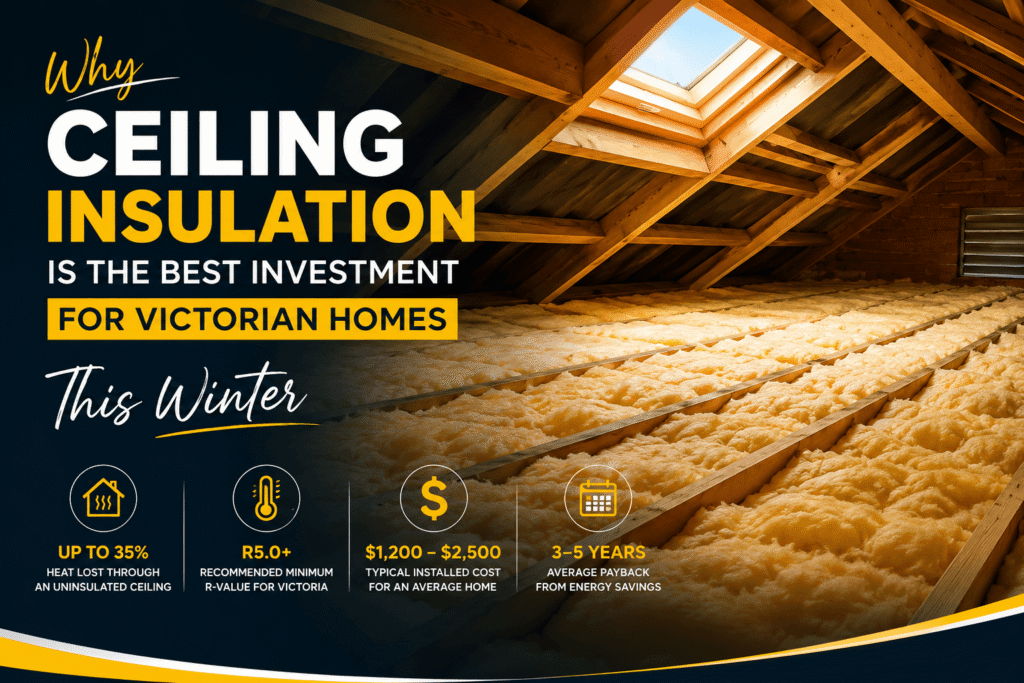
Yellow glasswool insulation batts installed between timber ceiling joists in a Victorian home roof space

Ceiling insulation is a thermal barrier, typically glasswool, polyester or mineral wool batts, installed between ceiling joists to stop heat escaping through the roof. In Victoria, up to 35% of a home’s heating energy is lost through an uninsulated ceiling. Installing batts rated R5.0 or higher costs $1,200 to $2,500 for an average home and pays for itself within 3 to 5 years through lower energy bills.

Up to 35% R5.0+ $1,200 – $2,500 3–5 Years
Heat lost through an uninsulated ceiling in winter Recommended minimum R-value for Victorian ceilings Typical installed cost for a 150 m² ceiling Average payback period from energy savings

In This Guide

  1. What Ceiling Insulation Is and How It Works
  2. Where Victorian Homes Lose the Most Heat
  3. Energy Savings and Payback Period
  4. R-Value Requirements for Victorian Climate Zones
  5. Glasswool, Polyester and Mineral Wool Compared
  6. The Installation Process for Existing Homes
  7. Ceiling Insulation Costs in Victoria
  8. Frequently Asked Questions

What Ceiling Insulation Is and How It Works

Ceiling insulation is a layer of thermal material installed between the ceiling joists in your roof space. It acts as a barrier that slows the transfer of heat between your living areas and the roof cavity above. In winter, ceiling insulation keeps heated air inside your home. In summer, it blocks radiant heat from a hot roof from entering your living spaces.

The insulation material traps millions of tiny air pockets within its fibres. These air pockets resist heat flow, a property measured by the product’s R-value. The higher the R-value, the greater the thermal resistance.

Ceiling insulation is available in three main material types: glasswool (the most common and affordable), polyester (hypoallergenic and moisture-resistant) and mineral wool (superior fire and acoustic performance). All three are manufactured as batts, which are pre-cut panels sized to fit between standard Australian ceiling joist spacings of 450 mm or 600 mm.

Why the ceiling matters most

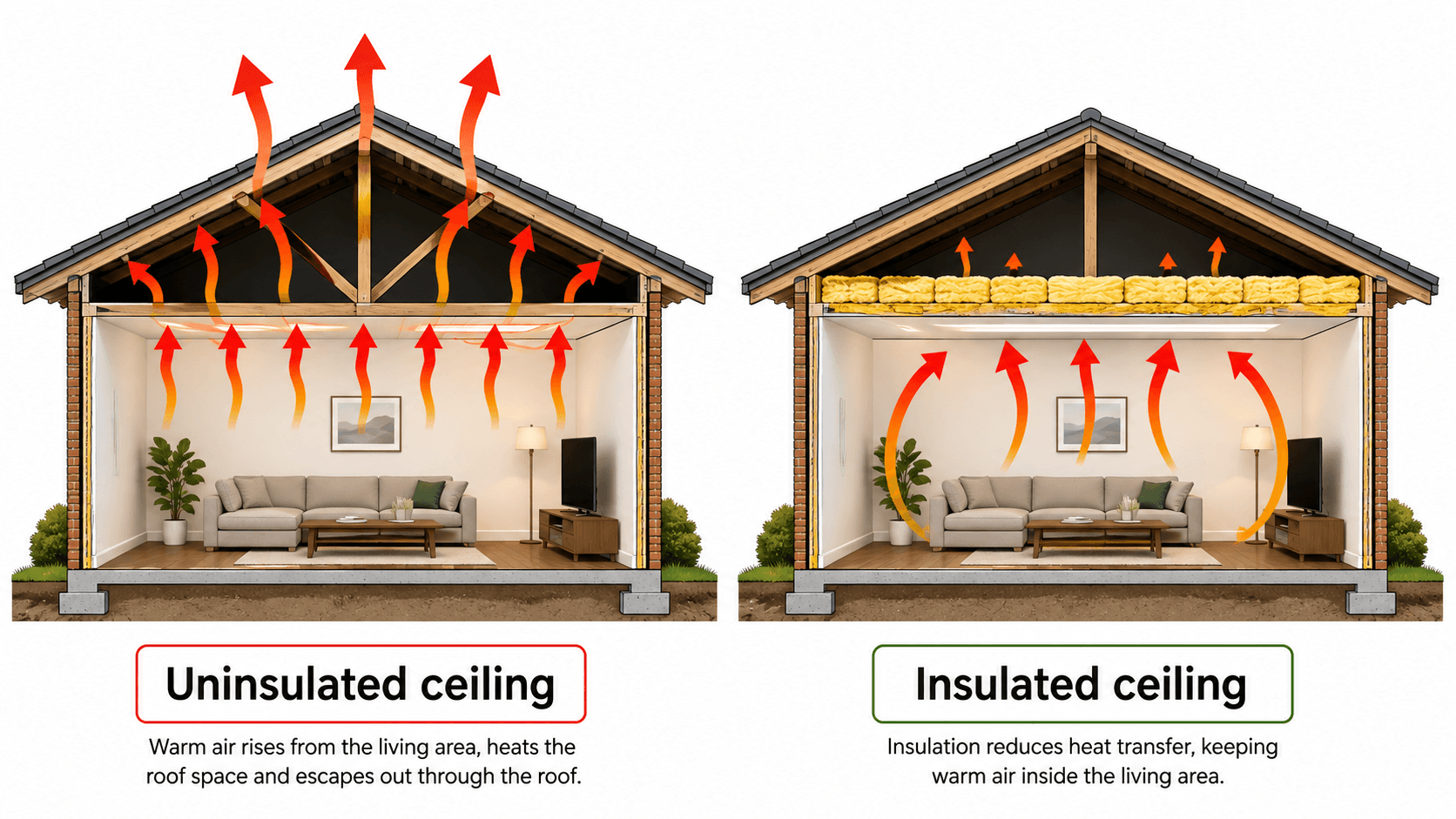
Heat rises. In an uninsulated home, warm air moves upward through the ceiling into the cold roof cavity and escapes outside. The ceiling is responsible for more heat loss than walls, windows or floors combined, making it the single highest-impact area to insulate.

Where Victorian Homes Lose the Most Heat

An uninsulated ceiling allows 25 to 35 per cent of a home’s total heating energy to escape into the roof cavity. This makes the ceiling the single largest source of heat loss in a typical Victorian home, ahead of walls (15 to 25%), windows (10 to 20%) and floors (10 to 20%).

The process is driven by convection. Warm air inside your living spaces is lighter than cold air, so it rises to the ceiling. Without an insulation barrier, that heat conducts through the plasterboard into the unheated roof cavity above. The greater the temperature difference between indoors and outdoors, the faster the heat escapes. This is why energy bills spike during Victoria’s coldest months from May through August.

Victoria’s Climate Zones Explained

Melbourne and most of metropolitan Victoria sit within NCC Climate Zone 6, classified as cool temperate. Regional centres including Ballarat, Bendigo and alpine areas fall into Climate Zone 7, classified as cold temperate.

Both zones experience overnight winter temperatures that regularly drop below 5°C, with alpine areas often reaching below zero. Without adequate ceiling insulation, a Victorian home’s heating system works significantly harder to maintain a comfortable indoor temperature, directly increasing gas and electricity costs throughout winter.

Diagram comparing heat escaping through an uninsulated ceiling versus being retained by an insulated ceiling

Energy Savings and Payback Period

Ceiling insulation reduces heating and cooling energy costs by 20 to 45 per cent in Victorian homes. For most homeowners, this translates to annual savings of $300 to $600 at current energy prices. The exact amount depends on the home’s starting condition, the R-value of the new batts and the efficiency of the heating system.

Factors That Affect Your Energy Savings

Sustainability Victoria states that effective ceiling insulation can save homeowners up to 20 per cent on heating and cooling costs. Independent energy modelling and industry assessments place the upper figure higher, up to 45 per cent, when old, compressed or absent insulation is replaced with modern batts rated R5.0 or above.

The savings depend on:

  • Starting condition. Homes with no insulation see the biggest improvement.
  • R-value of the new batts. Higher R-values deliver greater thermal resistance.
  • Heating system efficiency. Modern reverse-cycle systems amplify the savings.
  • Ceiling area and storeys. Larger ceiling areas produce greater total savings.
  • Draught sealing. Insulation combined with draught sealing delivers the best result.

When Ceiling Insulation Pays for Itself

Ceiling insulation typically pays for itself within three to five years. A 150 m² ceiling in a Melbourne home costs $1,200 to $2,500 fully installed. With annual energy savings of $300 to $600, the investment is recovered within that window. After payback, the savings continue for the life of the insulation, typically 50 years or more.

How this compares to other home improvements

A kitchen renovation ($15,000 to $40,000) or new flooring ($5,000 to $15,000) adds aesthetic value but no measurable financial return. Ceiling insulation delivers a quantifiable annual saving that compounds over decades. Dollar for dollar, it is the highest-return home improvement a Victorian homeowner can make.

Government Incentives for Insulation Upgrades

The Australian Government’s Household Energy Upgrades Fund (administered by the Clean Energy Finance Corporation) includes insulation among eligible upgrades and provides low-interest finance options. The Victorian Energy Upgrades (VEU) program offers incentives for certain energy efficiency improvements, though eligible activities change periodically. Check the Sustainability Victoria website for current incentives before scheduling your insulation installation.

R-Value Requirements for Victorian Climate Zones

R-value measures how effectively insulation resists heat flow. The higher the number, the better the insulation performs. For most Victorian homes, ceiling insulation rated R5.0 or higher is recommended. The National Construction Code (NCC) sets minimum R-values by climate zone, but exceeding the minimum delivers noticeably better comfort and greater energy savings.

NCC Minimum R-Values for Climate Zone 6 and Climate Zone 7

The NCC minimum ceiling insulation R-value for new homes in Climate Zone 6 (Melbourne metro) is approximately R3.5 to R4.0. In Climate Zone 7 (Ballarat, Bendigo, alpine Victoria), the minimum is R4.0 to R5.0. The exact figure depends on roof type, roof colour and ventilation configuration.

These minimums apply to new construction. There is no legal requirement to upgrade insulation in existing homes, but meeting or exceeding the current NCC minimum is strongly recommended for meaningful energy savings.

Why a Higher R-Value Delivers Better Value

The difference in product cost between R4.0 and R5.0 or R6.0 batts is modest, often $2 to $4 per square metre, but the improvement in thermal performance and comfort is significant. Most insulation professionals and energy assessors recommend R5.0 as the practical minimum for Victorian ceilings, with R6.0 or R7.0 for Climate Zone 7 and alpine areas.

R-Value Comparison for Victorian Ceiling Insulation

R-ValueZone SuitabilityPerformanceBest For
R3.5Zone 6, meets minimum onlyBasicBudget-conscious retrofits
R4.0Zone 6, meets or exceeds minimumGoodExisting homes, general use
R5.0Zone 6 and 7, above minimumVery GoodMost Victorian homes (recommended)
R6.0Zone 6 and 7, well above minimumExcellentNew builds, high comfort goals
R7.0Zone 7 and 8, maximum standard productPremiumAlpine and very cold regions

Glasswool, Polyester and Mineral Wool Compared

Glasswool is the best all-round ceiling insulation material for most Victorian homes. It offers excellent thermal performance across all R-values, is non-combustible and is the most affordable option. Polyester batts are the best choice for allergy-prone households because they are hypoallergenic and safe to handle without protective equipment. Mineral wool is the premium choice for homes that need superior fire resistance and acoustic performance. For a detailed comparison, read our guide to glasswool vs polyester insulation.

Material Comparison
Feature Glasswool Polyester Mineral Wool
Thermal performance Excellent Very good Excellent
Fire resistance Non-combustible Fire-retardant treated Non-combustible
Acoustic rating Good Good Very good
Moisture resistance Hydrophobic options available Naturally moisture resistant Hydrophobic options available
Price (relative) Most affordable Mid-range to premium Mid-range
Popular brands Bradford Gold, Pink Batts, Knauf Earthwool GreenStuf, Bradford Polymax Bradford Rockwool, James Hardie

Oz Homes Insulation stocks all three material types from leading Australian brands including Bradford, Knauf Earthwool, Fletcher Pink Batts and GreenStuf. Browse the full ceiling insulation range in the online store or call 1300 383 802 for product advice

Three types of ceiling insulation batts side by side showing yellow glasswool, white polyester and grey mineral wool

The Installation Process for Existing Homes

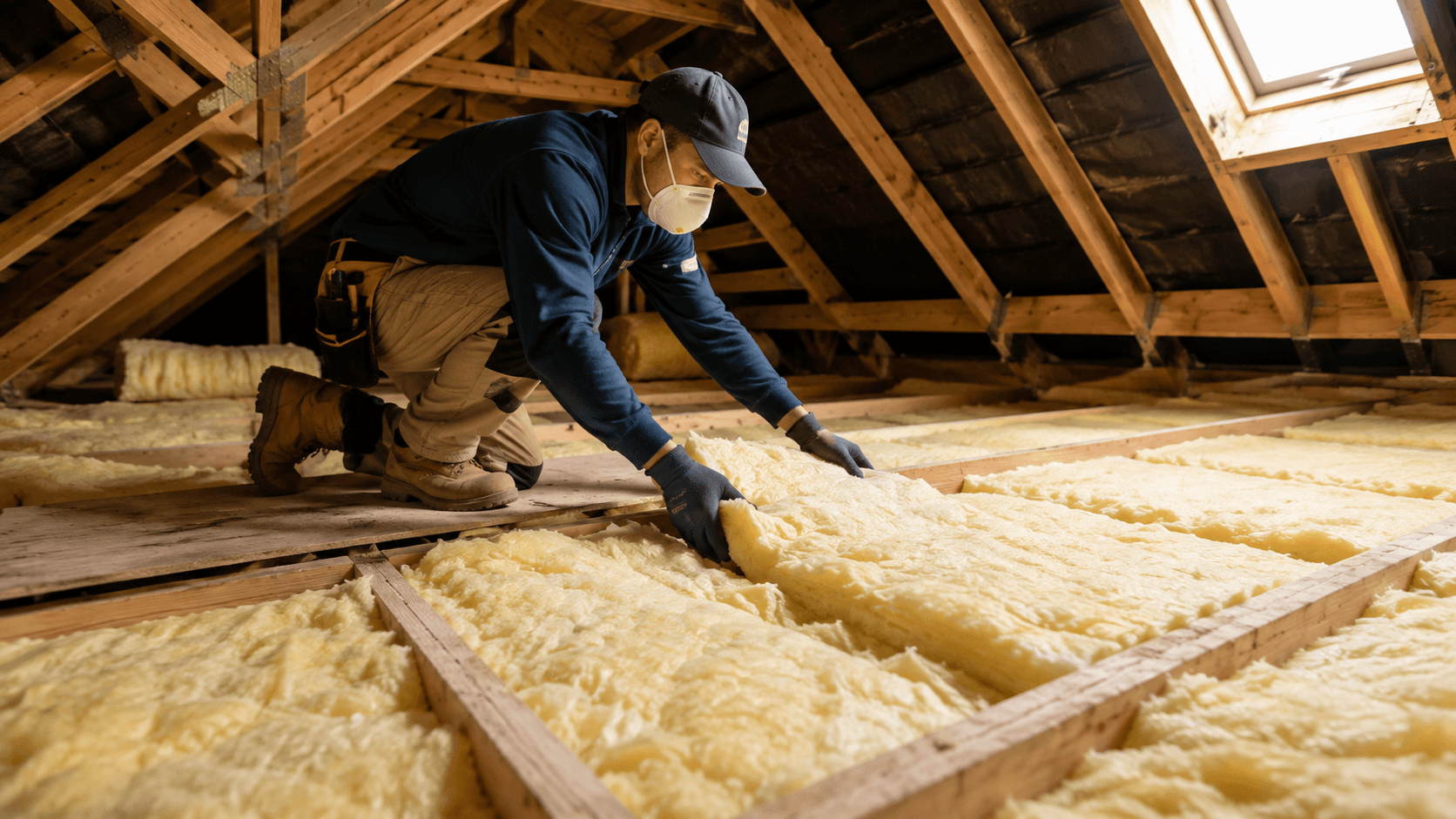
Ceiling insulation is installed from inside the roof space with no plaster removal, painting or structural work required. A professional installer accesses the roof cavity through a manhole or roof hatch, then lays batts between the ceiling joists. Most homes take half a day to a full day. The homeowner can remain in the house during the work. Learn more about insulation for existing homeowners.

Step by Step Installation

  1. The installer inspects the roof space for existing insulation, wiring, plumbing and downlights.
  2. Old insulation is removed if it is damaged, contaminated or ineffective (optional).
  3. New batts are friction-fitted between ceiling joists, pressed firmly against the ceiling lining.
  4. Safe clearances are maintained around downlights, exhaust fans and electrical fittings.
  5. Coverage is checked to ensure there are no gaps, compression or missed areas.

When Old Insulation Should Be Removed First

Remove old insulation before installing new batts when the existing material is damaged, contaminated or no longer effective. Removal is recommended when:

  • Old blow-in material has settled and compacted below effective thickness.
  • Rodent droppings, nesting or contamination are present.
  • Moisture damage or mould is visible.
  • The material has deteriorated beyond useful life.


When existing batts are in reasonable condition but under-performing, a second layer can sometimes be laid on top to increase the combined R-value.

Oz Homes Insulation operates Victoria’s largest insulation removal service. Their team vacuums out old material, sanitises the roof space and installs fresh batts in a single visit.

Downlight and Exhaust Fan Safety Clearances

Insulation must maintain safe clearances around recessed downlights and electrical fittings to prevent fire risk. Australian Standard AS/NZS 3000 and the NCC require specific setback distances depending on the fitting type. Non-IC-rated downlights (older halogen types) need insulation kept well clear of the fitting. IC-rated (insulation contact) downlights allow batts to be placed directly over them. For more detail, read our guide to fire safety and insulation materials.

A professional installer identifies the type of downlights in your ceiling and applies the correct clearances. If you have older halogen downlights, this is also a practical time to upgrade to LED fittings that generate far less heat.

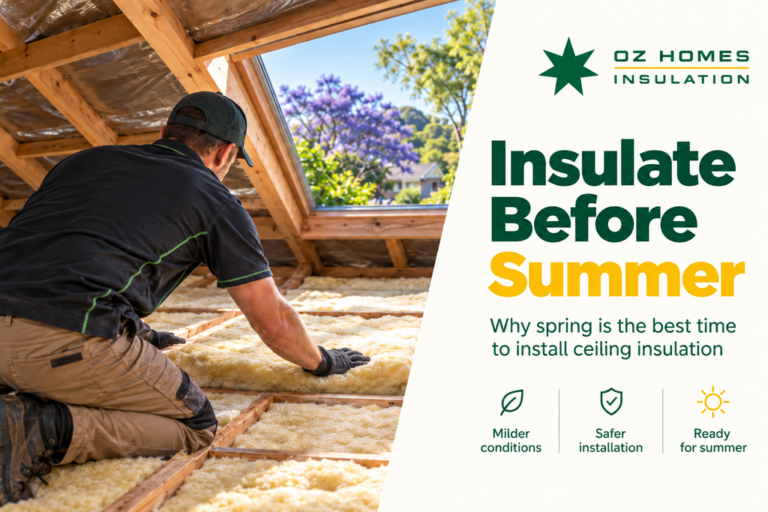
Insulation installer laying glasswool batts between ceiling joists in an existing home roof space

Ceiling Insulation Costs in Victoria

A fully installed ceiling insulation job for an average 150 m² Victorian home costs between $1,200 and $2,500. Supply-only pricing from the Oz Homes Insulation online store starts from approximately $4.50 per square metre for entry-level glasswool, with R5.0 and R6.0 batts typically ranging from $8 to $14 per square metre depending on brand and material.

Factors That Affect Your Price

  • R-value selected. Higher R-values cost more per square metre but deliver better performance.
  • Material type. Polyester is generally more expensive than glasswool.
  • Roof access. Difficult access (low clearance, limited entry points) adds labour time.
  • Old insulation removal. Removal and disposal is an additional cost if required.
  • Ceiling area. Larger homes require more product and more installation time.

Get an accurate price for your home

Every home is different. Oz Homes Insulation provides free, no-obligation quotes based on your ceiling area, roof access and preferred product. Call 1300 383 802 or request a quote online at ozhomesinsulation.com.au.

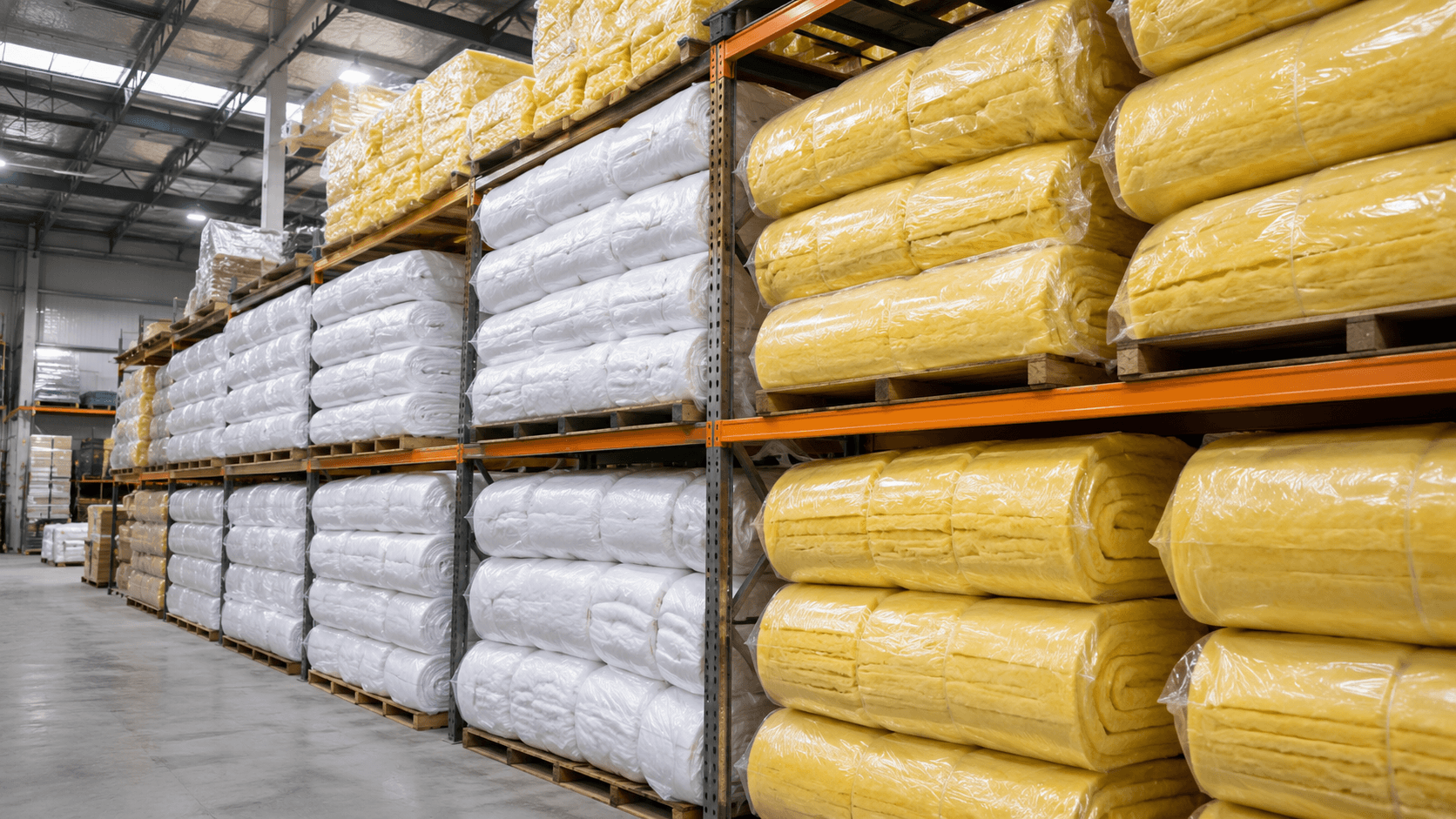
Stacked packs of ceiling insulation batts from different Australian brands on warehouse shelving

Take the Next Step Before Winter Hits

Ceiling insulation is the most practical, cost-effective upgrade a Victorian homeowner can make to reduce heating bills, improve comfort and add long-term value to their property. With a payback period of three to five years and a product life of 50 years or more, the return on investment is difficult to match.

Oz Homes Insulation supplies and installs ceiling insulation across Victoria, carrying all major brands including Bradford, Knauf Earthwool, Fletcher Pink Batts and GreenStuf. Whether you need supply only, professional installation or old insulation removed and replaced, their team can help.

Get a Free Ceiling Insulation Quote

Call 1300 383 802 or visit ozhomesinsulation.com.au/contact to request a free, no-obligation quote. Oz Homes Insulation, Victoria’s most trusted installers, rated 4.9 stars from 600+ Google reviews.

Frequently Asked Questions

Is it better to insulate the ceiling or the roof?

Yes, ceiling-level insulation is more effective and more affordable for most homes. Insulating at ceiling level creates a thermal barrier directly above your living spaces, which is where heat loss matters most. Roof-level insulation (batts installed between rafters) is typically used only in homes with cathedral ceilings, exposed rafters or liveable attic spaces. For homes with a standard pitched roof and flat ceiling, ceiling insulation is the recommended approach. Read more about roof insulation options.

Yes. Ceiling insulation batts reduce airborne noise transfer between rooms and from outside. Glasswool and mineral wool are particularly effective at dampening rain noise on metal roofs, road traffic and aircraft. If noise reduction is a priority, choose a product with a higher acoustic rating (Rw value) alongside the thermal R-value. Browse acoustic insulation products.

Yes. Ceiling insulation works in both directions. In winter, it keeps heated air inside. In summer, it blocks radiant heat from a hot roof transferring down into your living areas. A well-insulated ceiling can reduce cooling costs significantly during Melbourne’s summer heatwaves. Read our related article on how insulation keeps your home cool during El Niño.

No. Adding or replacing ceiling insulation in an existing home is classified as routine maintenance under Victorian Building Authority guidelines. No building permit is required. However, if the insulation work is part of a broader renovation that triggers a permit, the insulation must comply with current NCC requirements for that climate zone.

Yes, it helps, but ventilation matters too. Ceiling insulation reduces condensation by minimising the temperature difference between the warm ceiling surface and the cold roof cavity air. However, if your roof space has a significant condensation issue, adequate ventilation is also needed. In NCC Climate Zones 6, 7 and 8, specific roof ventilation requirements apply. A professional installer can assess whether additional ventilation is needed alongside your insulation.
Quick Quote

Our team are well placed to advise you on the right insulation products for your construction project.

Request Call back in 1 hour

Our team are well placed to advise you on the right insulation products for your construction project.

Request a Callback

Send us your details in the form below and a member of our team will call you as soon as possible.