

A home is wasting money on energy bills when heat escapes through its ceiling, walls, floors, windows and gaps, so heating and cooling run longer than they should. The five signs are rising energy use, rooms that lose warmth quickly, thin or damaged ceiling insulation, draughts or cold floors, and an older home that has never been checked. Victorian Government data shows 25 to 35 per cent of heat loss or gain happens through the ceiling.
Key Takeaways
- For most Victorian homes, the best first steps are sealing draughts and fixing the ceiling insulation.
- Check your bill first and compare average daily usage in kWh or MJ with the same season last year.
- Rising usage, not just a rising bill, points to energy waste.
- The ceiling accounts for 25 to 35 per cent of a home’s heat loss or gain, so check it before other areas.
- Thin, squashed or pest-affected ceiling insulation should be topped up to at least R3.5, or removed and replaced.
- Air leaks can cause 15 to 25 per cent of winter heat loss in buildings.
- From 1 October 2026, eligible Victorian homes can get a VEU ceiling insulation discount through Energy Efficiency Council-certified installers.
This guide explains each warning sign, how to check your bill and roof space safely, what to fix first and how the Victorian ceiling insulation discount works. Oz Homes Insulation helps owners of established Victorian homes find and fix the gaps.
These terms explain how a home loses energy and how the Victorian ceiling insulation discount works.
| Term | Definition |
|---|---|
| Home energy waste | Heating or cooling energy lost because heat moves through the building shell, gaps and poorly insulated areas instead of staying inside. |
| Building shell | The roof, walls, floor, windows and insulation that separate the inside of a home from the outside. |
| R value | A rating of how well insulation resists heat flow. A higher R value means better insulation, and compression lowers it. |
| Draught proofing | Sealing unwanted gaps around doors, windows, vents and floors with seals and gap fillers. |
| Under insulated ceiling | Under the VEU program, a ceiling whose existing uncompressed insulation averages below R2.0, as defined by the Essential Services Commission. |
| kWh and MJ | Kilowatt hours measure electricity use and megajoules measure gas use. Energy bills show both as average daily usage. |
| Victorian Energy Upgrades (VEU) | A Victorian Government program offering a ceiling insulation discount to eligible homes from 1 October 2026. |
Each sign points to a different heat loss problem and a different first step.
| Sign | What It Usually Means | First Step |
|---|---|---|
| 1. Energy use is rising, not just the bill | Heating or cooling is working harder than it should | Compare daily kWh or MJ with the same season last year |
| 2. Warmth fades soon after the heater goes off | Heat is escaping through the building shell, often the ceiling | Check the ceiling insulation |
| 3. Thin, patchy or squashed ceiling insulation | Heat passes through gaps and compressed batts | Top up to at least R3.5, or remove and replace |
| 4. Draughts or cold floors | Air is leaking through gaps, vents or floorboards | Seal gaps and insulate raised timber floors |
| 5. Older home, insulation never checked | Insulation may be missing, disturbed or damaged | Book a roof space inspection |
Start with the fixes that stop the most heat loss for the lowest cost. For most Victorian homes, that means checking your energy plan, sealing draughts and then fixing the ceiling insulation.
Top up when: the ceiling insulation is clean, dry, evenly spread and simply too thin.
Remove and replace when: the insulation is compressed, damp, very dusty, pest-affected, or mixed with debris. Laying new batts over contaminated insulation leaves the problem in your roof.
An installer can inspect the roof space and tell you which option fits. Insulation should be installed in line with Australian Standard AS 3999 and the electrical wiring rules, AS/NZS 3000.
Oz Homes Insulation supplies and installs ceiling, wall and underfloor insulation, including glasswool and polyester batts from brands such as Bradford, Knauf Earthwool, Fletcher Pink Batts and GreenStuf. Customers who prefer to do the work themselves can also buy insulation online, collect it from the Ravenhall warehouse or arrange delivery.
Rising energy use is the clearest sign your home is wasting energy. A higher bill alone is not proof, because prices, plans and billing periods change. Check the average daily usage in kWh or MJ shown near the graph on your bill. Compare it with the same billing period last year, because winter usage is usually higher than spring usage.
This check matters in 2026. The Essential Services Commission cut the Victorian Default Offer by an average of 5 per cent from 1 July 2026. Households on that offer will save about $84 a year on average. Most Victorians are on market offers instead, so check your own retailer’s price change notice as well.
Tip: Compare usage, not dollars. When prices have not risen, but your daily usage has, the extra cost comes from how much energy your home needs. That usually means your heating or cooling is working harder than it should.
An electricity bill rises because you used more energy, paid a higher price, or were billed over a longer period. Three quick checks tell you which one applies:
Usage that has climbed for no clear reason is a strong sign your home is losing heat. Victorian Energy Compare, the free Victorian Government comparison site, can also show whether a cheaper plan suits your usage. A better plan lowers the price you pay, but it will not stop heat escaping.

A home that cools down quickly after the heater is switched off is losing heat through its building shell. Warm air rises, so the ceiling is usually the biggest escape route.
You may also notice:
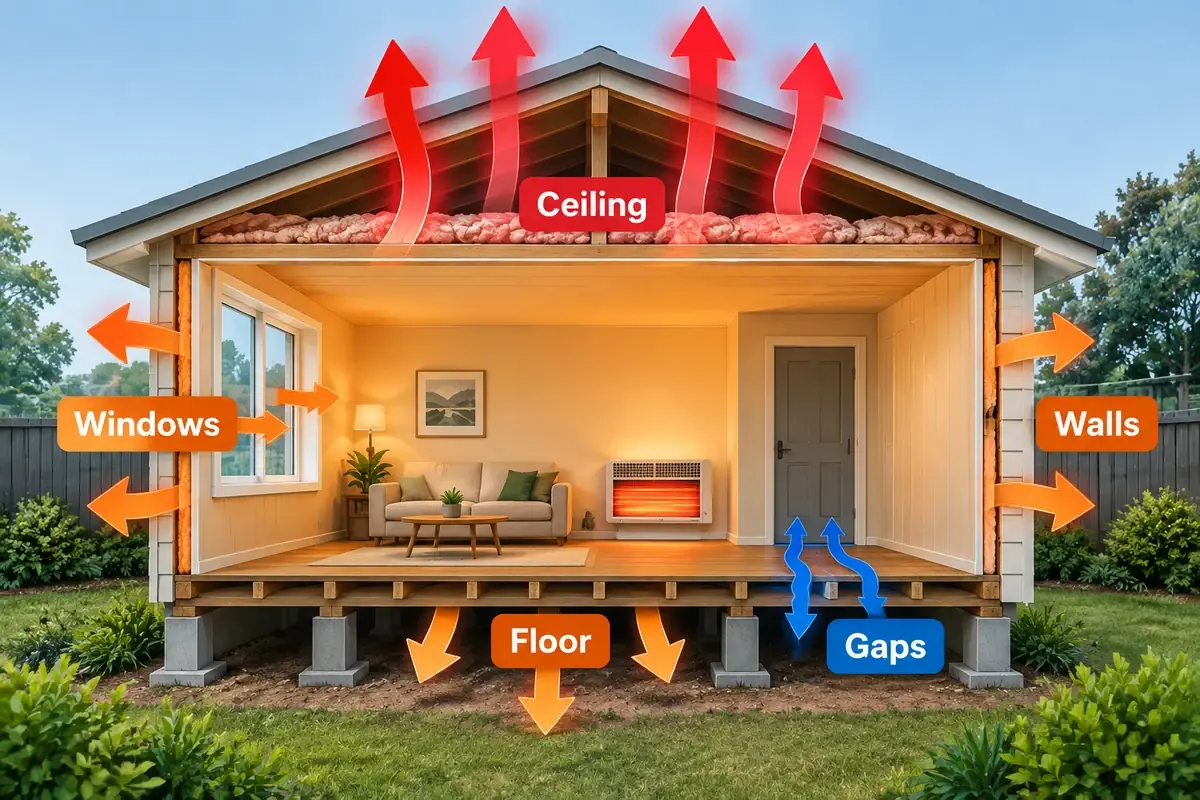
The Victorian Government’s Residential Efficiency Scorecard program lists where heat typically moves in and out of a home.
| Part of the Home | Share of Heat Loss | What You Might Notice |
|---|---|---|
| Ceiling | 25 to 35 per cent of heat loss or gain | Rooms cool fast once heating stops |
| Walls | 15 to 25 per cent of heat loss | External walls feel cold to touch |
| Floors | 10 to 20 per cent of heat loss or gain | Cold floors, especially raised timber floors |
| Windows | 10 to 20 per cent of winter heat loss | Cold air near the glass |
| Gaps and cracks | 5 to 25 per cent of heat loss or gain | Draughts and moving curtains |
These ranges vary from home to home and are not meant to add up to a fixed total. Because the ceiling carries the largest share, it is often the most practical place to start. Learn more about how ceiling insulation reduces winter heat loss.
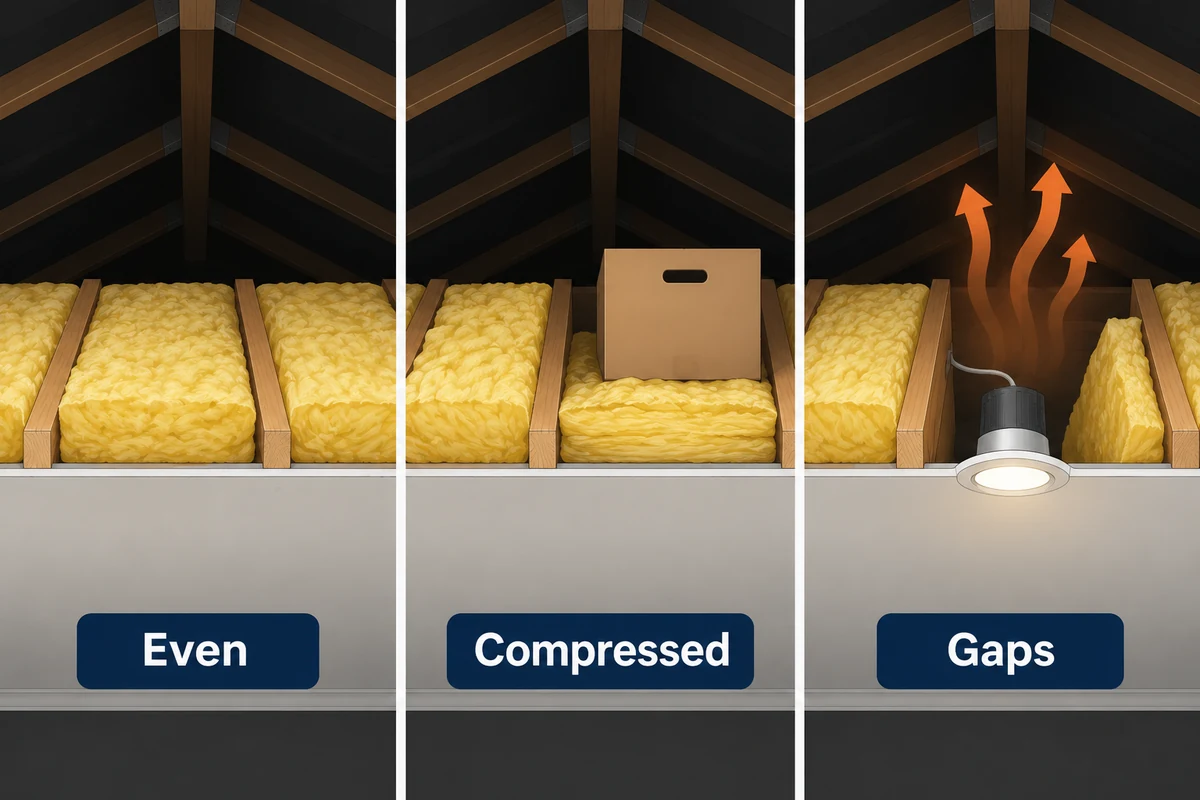
Ceiling insulation only works well when it is thick enough, evenly laid and not compressed. Missing batts, gaps between batts, flattened sections and damaged insulation all let heat pass through. The Residential Efficiency Scorecard program recommends topping up accessible ceiling insulation to at least R3.5.
Compression matters. Squashed insulation loses performance. Sustainability Victoria gave the example of a 150 mm glasswool batt losing 25 per cent of its R value when squeezed into a 90 mm space. Our guide to R values for Australian homes explains the ratings in more detail.
Watch for old downlights. Older incandescent and swivel halogen fittings let a lot of air leak into the roof space. Some fittings also need a safety gap around them, which leaves a hole in the insulation.
Looking in your roof space is the fastest way to confirm this sign. Once you can see the insulation, look for:
Safety first before you go into the roof.
- Wear a P1 or P2 face mask that meets AS/NZS 1716, plus protective clothing.
- Use a torch and step only on the ceiling joists, so you do not fall through the ceiling.
- Do not touch electrical cables. Stop and call a licensed electrical contractor if you see damaged wiring.
- Leave any material you do not recognise alone. Homes built before the 1990s may contain asbestos cement materials in eaves, flues and ceilings.
Damaged, dusty or pest-affected insulation usually needs to come out before new insulation goes in. Oz Homes Insulation can remove old or damaged insulation and install the replacement as one project. Removal can involve vacuuming out the old material and cleaning the roof space first.
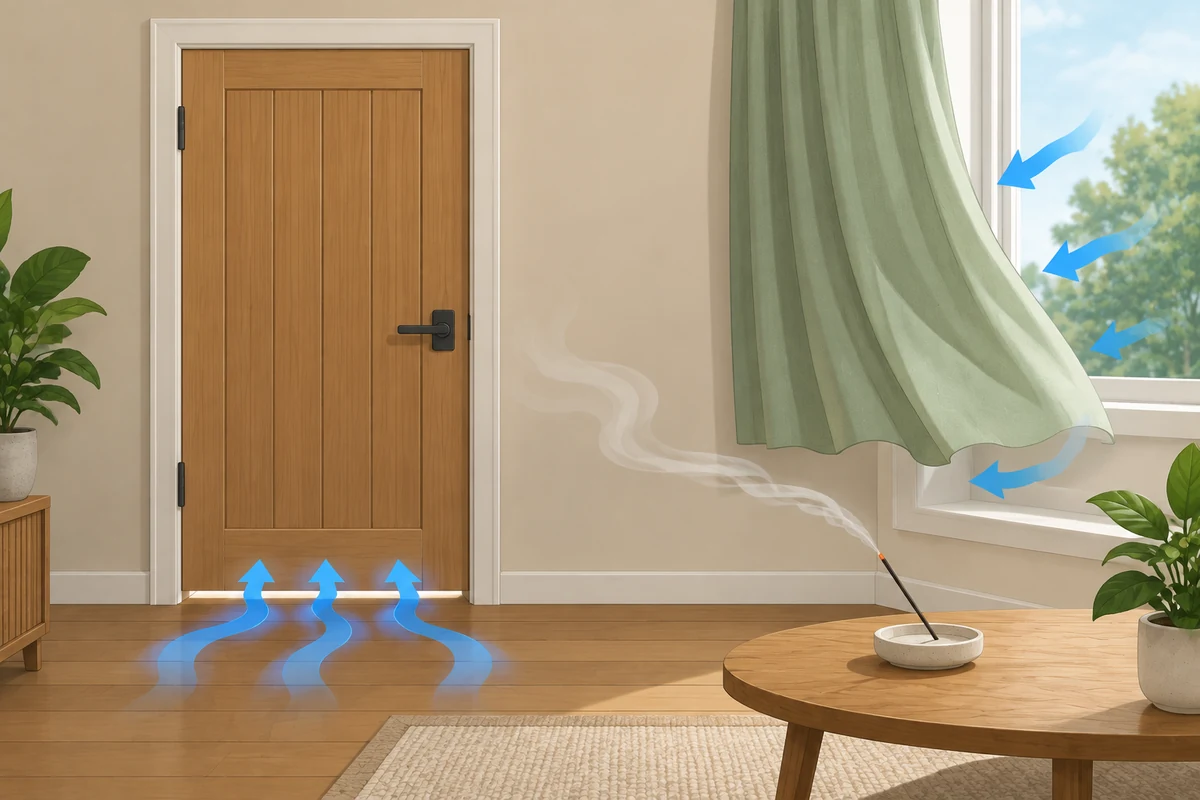
Draughts and cold floors mean warm air is leaking out, and cold air is getting in. Air leaks can cause 15 to 25 per cent of winter heat loss in buildings, according to CSIRO research cited by the Australian Government’s YourHome guide. Draughts also make you feel colder, because moving air passes over your skin.
Common signs of draughts include:
Tip: Try the incense test. Hold a lit incense stick near doors, windows and skirting boards on a windy day. Smoke that blows sideways shows where air is leaking in.
Floors matter too. Between 10 and 20 per cent of heat loss or gain can happen through floors. Raised timber floors with space underneath can usually be insulated with batts or boards fitted between the joists. Concrete slab floors cannot be insulated after construction. Read about the benefits of underfloor insulation for older timber floors.
Take care when sealing gaps. Do not block vents in rooms that use an open flued or portable unflued gas heater. Bathrooms and laundries also need ventilation to prevent mould.
An older home that has never had an insulation check is a common source of wasted energy. Almost 60 per cent of Victorian homes have no ceiling insulation or are under-insulated, according to the Victorian Government. Without a check, you cannot tell which group your home is in.
Insulation can stop performing well over the years for several reasons:
Older homes often have other weak points. Homes built before the mid 1980s often have wall or ceiling vents. External walls may have little or no insulation, and they are hard to check without opening them up. The best time to insulate walls is usually during a renovation, when the linings or cladding come off.
A professional inspection is the quickest way to learn what is in your roof and under your floor. The Victorian Residential Efficiency Scorecard is another option when you want a whole-of-home energy rating.
Yes. From 1 October 2026, eligible Victorian homes with uninsulated or under-insulated ceilings can get a ceiling insulation discount through the Victorian Energy Upgrades (VEU) program. The Essential Services Commission treats a ceiling as under-insulated when its existing uncompressed insulation has an average R value below R2.0.
| VEU Detail | What the Official Sources Say |
|---|---|
| Start date | Open to all eligible Victorian homes from 1 October 2026. Stage 1 began on 14 April 2026 for public and community housing only. |
| Discount | Solar Victoria says around $1,482 off installation, about 30 to 50 per cent of the total cost depending on home size. |
| Estimated savings | The Victorian Government says many households could save more than $400 a year on energy bills on average. |
| Installers | Only Energy Efficiency Council certified installers can carry out these upgrades. |
| Excluded products | Foil-faced, cellulose and loose fill insulation. |
| Safety checks | An electrician must complete a safety assessment before installation, and some downlights may need upgrading first. |
| Underfloor | The separate VEU underfloor insulation activity was removed on 14 April 2026. |
Tip: Ask before you book. Before you book a discounted job, ask the installer to confirm their VEU accreditation and certification in writing.
Bottom line: All five signs point to the same problem: heat you paid for is escaping. Check your bill, look in the roof space and seal the obvious gaps before winter comes around again.
Oz Homes Insulation has supplied and installed insulation across Melbourne and much of regional Victoria since 2016, from its warehouse in Ravenhall. The team can remove old insulation, recommend the right R value and install new insulation in one project.
Find Out What Your Home Needs
Removal, supply and installation from one Victorian insulation team.
Old insulation can still work when it is dry, clean, evenly spread and uncompressed. Insulation loses performance when it is squashed, damp, disturbed, dusty or damaged by pests. Age alone does not decide whether insulation needs replacing. The condition you find in the roof space does.
For existing homes, the Residential Efficiency Scorecard program recommends topping up ceiling insulation to at least R3.5. Sustainability Victoria advised aiming for R5.0 in alpine areas. New homes must meet National Construction Code requirements, which depend on the design and climate zone. Most of Melbourne sits in NCC climate zone 6.
Ceiling insulation cost depends on the ceiling area, roof access, the R value you choose and whether old insulation must be removed first. Eligible homes may also receive the VEU discount from 1 October 2026. A written quote based on an inspection of your roof space is the most reliable way to compare prices.
Insulating an older weatherboard house is often worthwhile, because many have raised timber floors and older ceilings that leak heat. Start with the ceiling, then consider underfloor insulation where there is access underneath. Walls are easiest to insulate during a renovation, when the linings or cladding are off.
Quick Quote
Our team are well placed to advise you on the right insulation products for your construction project.
Our team are well placed to advise you on the right insulation products for your construction project.