
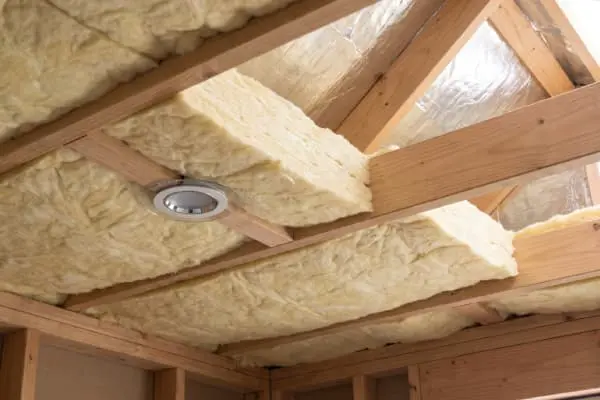
These are made from spun glass or stone and simply do not burn. Glasswool (like Knauf Earthwool and Fletcher Pink Batts) is classed as non-combustible when unfaced; rockwool (mineral wool) is one of the most fire-resistant materials available.
It’s an organic (paper-based) material treated with fire-retardant chemicals so it chars and resists flame spread rather than burning freely.
Crucially, in Australia insulation must meet the fire requirements of the National Construction Code (NCC). That means genuinely high-risk, highly flammable insulation isn’t sold for typical residential building work in the first place so the question is less “will it burst into flames?” and more “which fire-safe material is right for my home and location?”
Australia doesn’t rely on marketing words like “fireproof.” Fire performance is measured against defined standards, and the NCC (Building Code of Australia, BCA) sets out where and how those requirements apply. Three plain-English terms are worth knowing:
When you compare products, this is why the data sheet matters more than the sales pitch, the numbers under AS 1530 tell you how the material and its facing genuinely behave.
| Material | Fire behaviour | AU classification* | Best use |
| Glasswool / fibreglass | Does not burn; unfaced batts non-combustible | Non-combustible (AS 1530.1) if unfaced | Ceilings, walls, general |
| Rockwool / mineral wool | Withstands ~1,000°C+; does not ignite | Non-combustible (AS 1530.1) | Fire-rated walls, acoustic, high-risk |
| Polyester | Melts/burns under sustained flame | Combustible; check indices | Acoustic, low fire-risk areas |
| Cellulose | Treated with fire retardant; chars | Fire-retardant (not non-combustible) | Loose-fill ceilings |
| Spray foam (PU/PIR) | Combustible; ignites, emits smoke | Combustible; needs thermal barrier | Sealed cavities w/ barrier |
| Reflective foil / sarking | Foil non-combustible; backing may burn | Check flammability index (AS 1530.2) | Roof/wall radiant barrier |
| EPS / polystyrene | Combustible; melts and ignites | Combustible | Only in fire-rated systems |
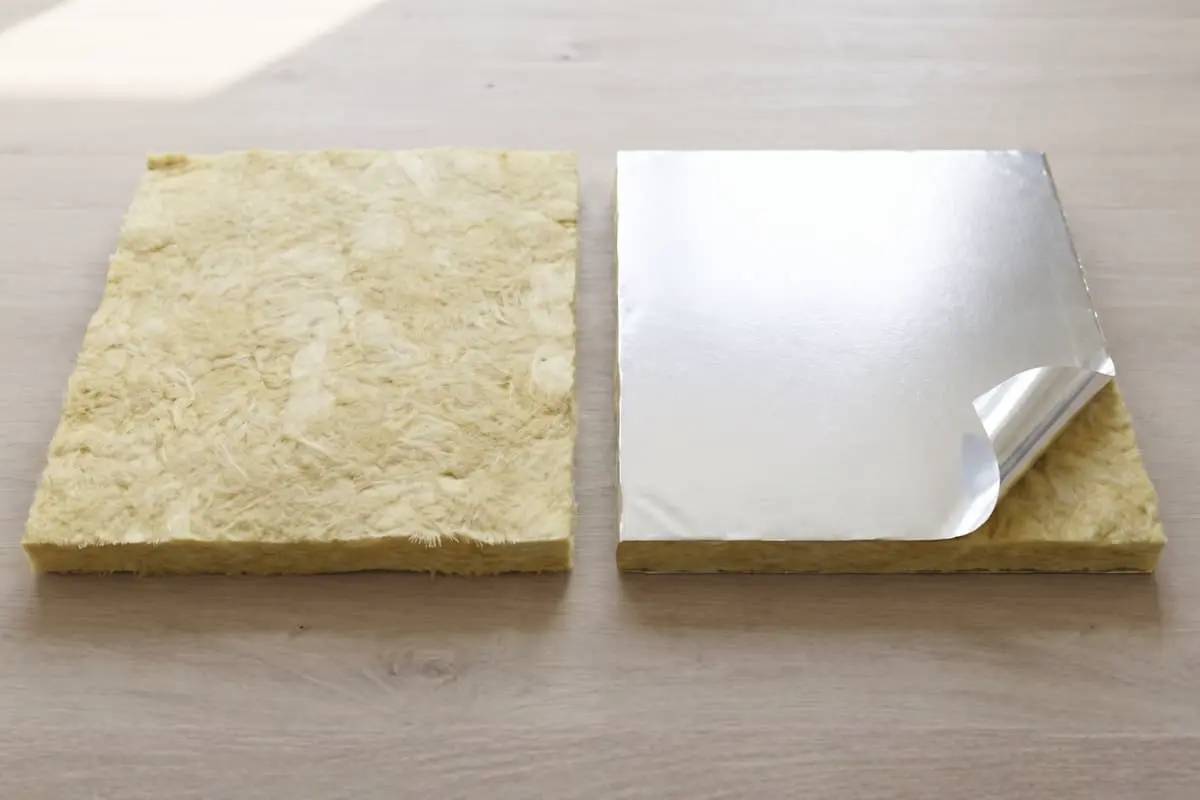
Spun from glass, glasswool is non-combustible when unfaced and one of the most widely used insulation types in Australian homes. Brands like Knauf Earthwool non-combustible glasswool and Fletcher Pink Batts insulation fall into this group. Watch the facing, though a foil or paper facing can be combustible even when the batt itself isn’t.
Made from spun stone, rockwool withstands very high temperatures, commonly cited as around 1,000°C or more without igniting. It’s the go-to choice where fire performance is the priority, such as fire-rated and party walls, and it doubles as an excellent acoustic insulator.
Polyester is soft, non-irritant and popular for acoustic use, but it will melt and burn under a sustained flame. It’s often treated to improve fire behaviour, so always check the indices before using it where fire matters.
A recycled paper-based loose-fill product treated with fire-retardant (typically borate) chemicals. It’s flame-retardant and chars rather than burning freely, but it is not non-combustible, so don’t describe it as fireproof.
Polyurethane and PIR spray foams are combustible, can emit significant smoke, and must be protected behind a thermal barrier. They’re generally not suitable for bushfire-prone areas or anywhere a non-combustible material is required.
The foil itself is non-combustible, but the backing and adhesive can burn, so foil products are rated for flammability under AS 1530.2. Check the flammability index before use as a radiant barrier.
Expanded polystyrene is combustible, it melts and ignites and should only ever be used within a properly designed fire-rated cladding system, never exposed.
Not sure what suits your build? Our guide to insulation types and their applications breaks it down further.
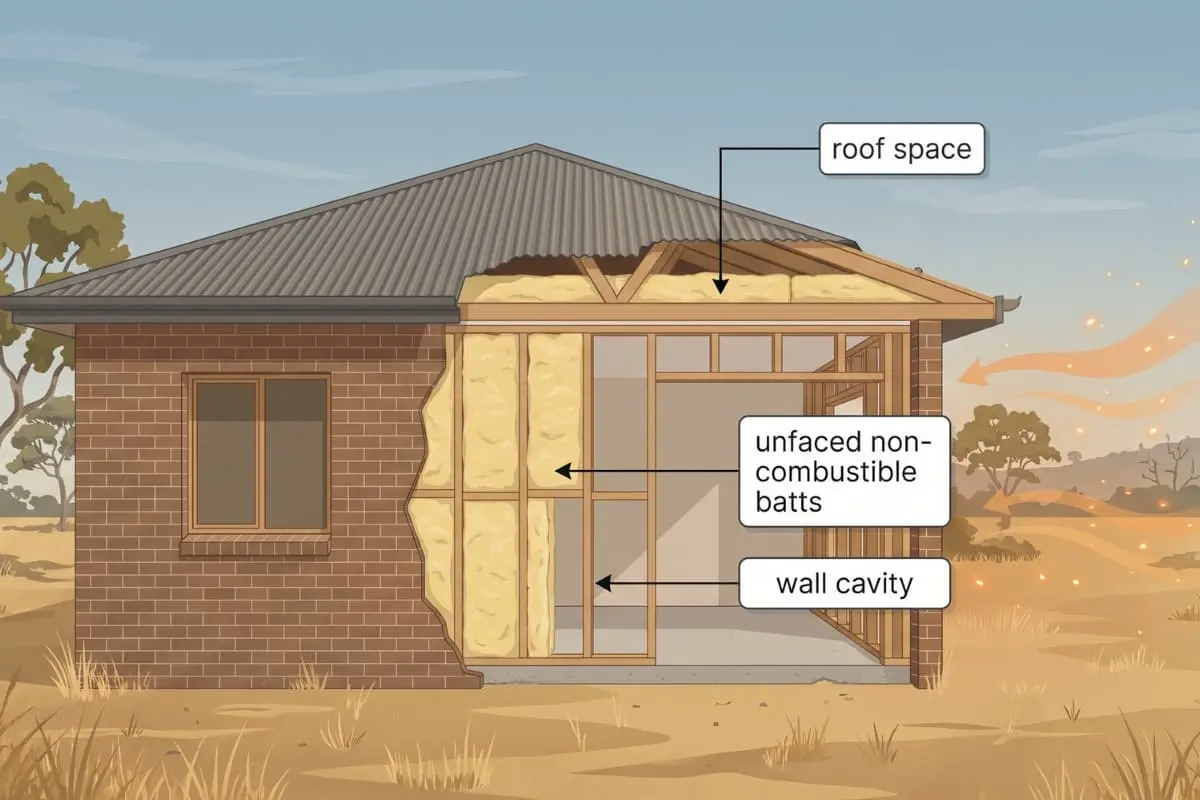
If your home is in a designated bushfire-prone area, insulation choice becomes a compliance issue, not just a preference. Construction in these zones is governed by AS 3959 – Construction of buildings in bushfire-prone areas, which assigns a BAL (Bushfire Attack Level) – from BAL-LOW through BAL-12.5, 19, 29, 40 and BAL-FZ (Flame Zone) based on your exposure to radiant heat, embers and flame.
This is especially relevant across regional and peri-urban Victoria, where large areas are bushfire-prone. Because getting this wrong has life-safety and compliance consequences, always confirm the required specification with your building surveyor and match it to the correct BAL. Our team can help you select compliant, non-combustible products for your rating.
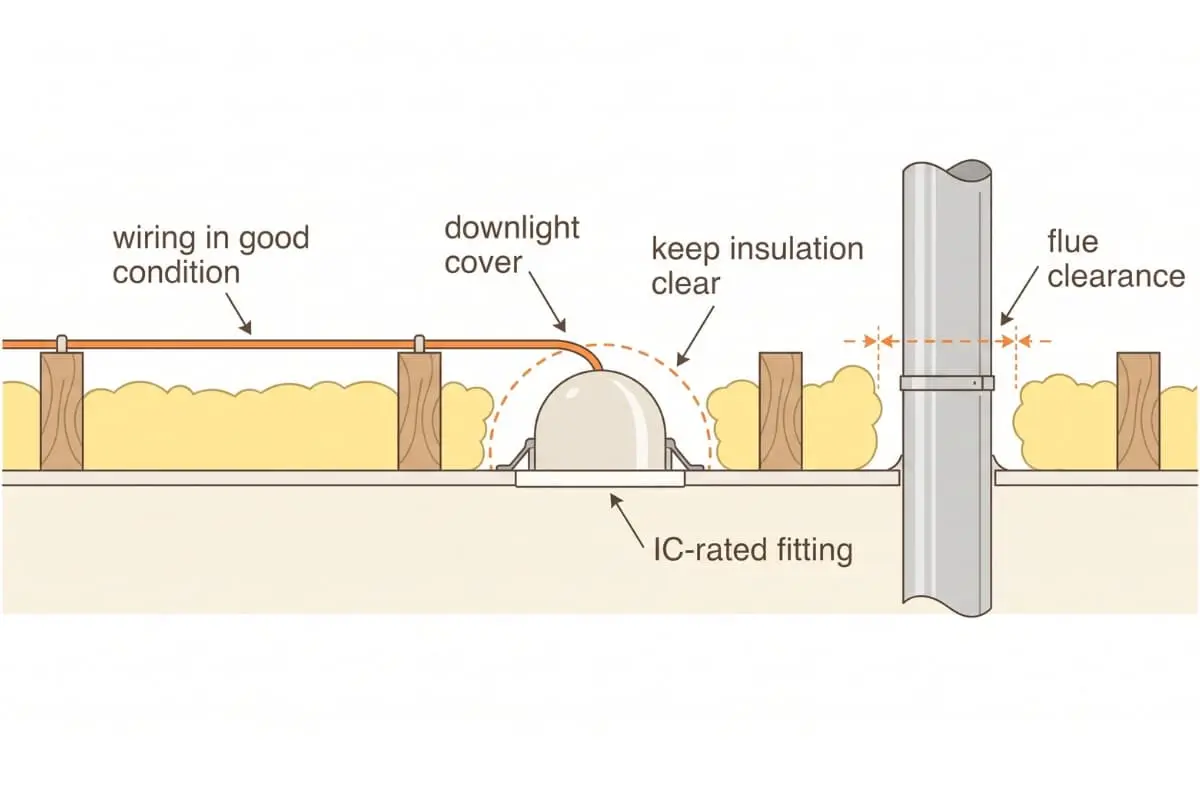
Here’s the part that surprises people: most insulation-related fires don’t start with the insulation itself. They start with an external heat source, and combustible material nearby is drawn in. The usual culprits:
Professional installation is the simplest way to get clearances, facings and product selection right the first time. See our professional insulation installation service.
Quick Quote
Our team are well placed to advise you on the right insulation products for your construction project.
Our team are well placed to advise you on the right insulation products for your construction project.