
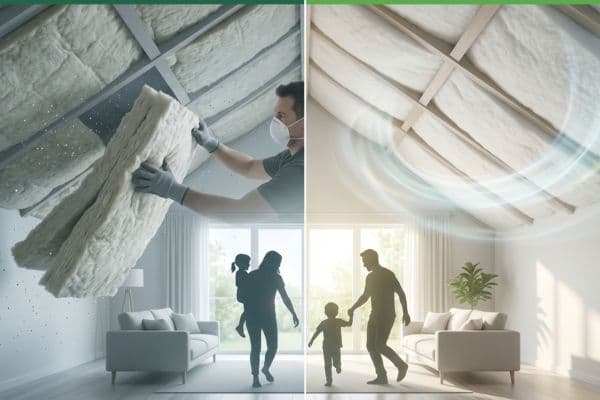
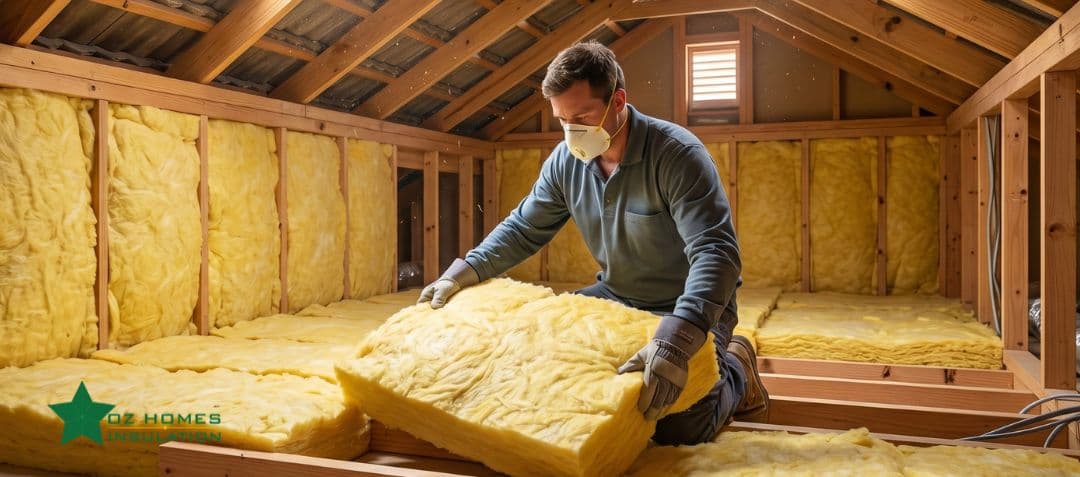
Glasswool insulation is one of the most widely used insulation materials in Australian homes. It is manufactured from fine glass fibres spun into a wool-like texture.
It is commonly installed in ceilings and wall cavities and is known for its strong thermal performance, helping homes meet the requirements of the National Construction Code (NCC), including appropriate R-values for different climate zones.
Glasswool also offers good acoustic insulation, making it useful for reducing noise transfer between rooms. However, during installation or disturbance, it can release small airborne particles, which may cause irritation.
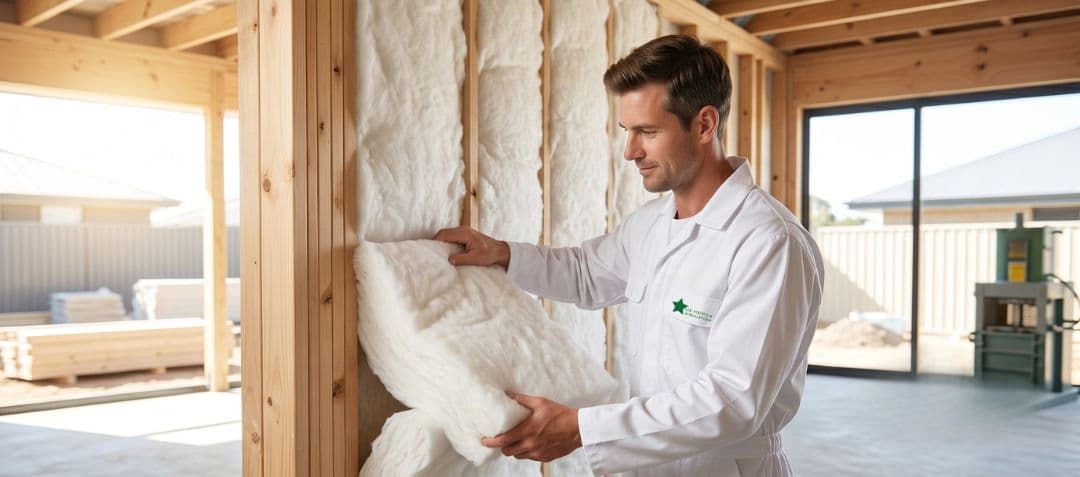
Polyester insulation is made from recycled plastic fibres, often sourced from PET materials such as plastic bottles. It has become increasingly popular in modern Australian homes, particularly where health and safety are priorities.
Unlike glasswool, polyester insulation is soft to the touch and does not cause itching or irritation when handled. It does not release harmful particles into the air, making it a safer option during installation and throughout its lifespan.
Its durability and low аllergenic properties make it especially appealing for family homes.
Indoor air quality is a key factor for families dealing with allergies, asthma, or respiratory sensitivities. Insulation materials can influence the presence of airborne particles, dust, and moisture within the home.
Poor insulation or unsuitable materials may contribute to discomfort, trigger allergic reactions, or worsen existing conditions. On the other hand, choosing the right insulation can help maintain stable indoor temperatures and support a cleaner, healthier living environment.
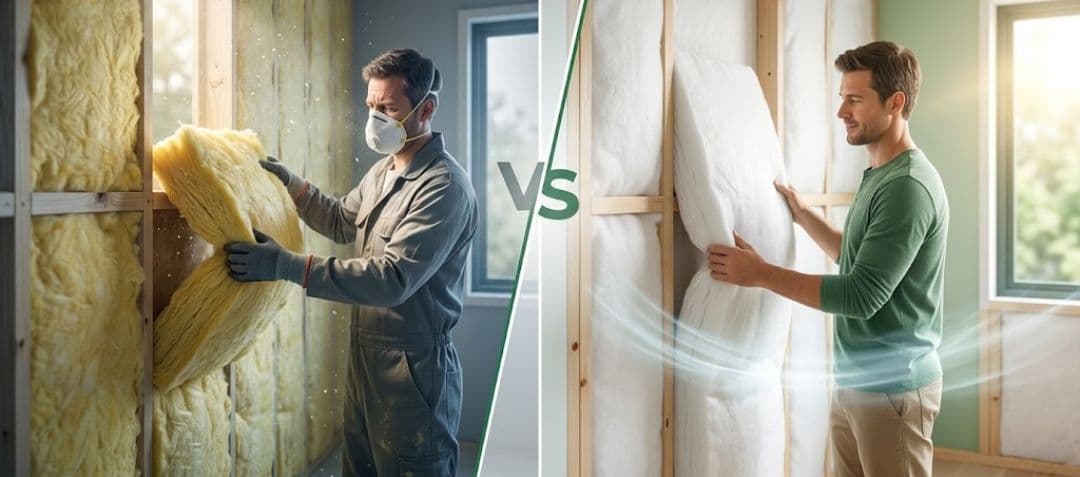
For households concerned about allergies and respiratory health, polyester insulation is generally the better choice.
It offers a lower risk of irritation, does not release airborne fibres, and contributes to cleaner indoor air. This makes it ideal for bedrooms, living areas, and other high-use spaces where comfort and health are essential.
Polyester insulation aligns well with modern building practices that prioritise occupant wellbeing alongside energy efficiency.
Despite its drawbacks, glasswool insulation still has its place in certain projects.
It is typically more affordable upfront, making it attractive for large-scale builds or budget-conscious renovations. When installed professionally and properly sealed in accordance with Australian Standards and NCC requirements, the risk of exposure to fibres can be minimised.
For areas with less frequent occupancy, glasswool can still be a practical solution.
Cost is often a deciding factor, but it’s important to look beyond the initial price.
Glasswool insulation generally has a lower upfront cost, while polyester insulation may be slightly more expensive. However, polyester offers greater comfort, improved safety, and long-term health benefits.
For many families, especially those managing allergies, the improved living conditions and peace of mind can outweigh the initial investment.
Before making your decision, consider the following:
A tailored approach will always deliver the best results.
Making the right insulation choice can significantly improve your home’s comfort and indoor air quality.
If you’re unsure which option is best for your household, contact a local insulation expert who understands Australian conditions and building requirements.
Visit https://ozhomesinsulation.com.au/ to learn more and find the best insulation solution for your home.
Quick Quote
Our team are well placed to advise you on the right insulation products for your construction project.
Our team are well placed to advise you on the right insulation products for your construction project.